mirror of
https://github.com/avinal/avinal.github.io.git
synced 2026-07-04 15:50:08 +05:30
 avinal
a196ac4391
avinal
a196ac4391

Signed-off-by: Avinal Kumar <avinal.xlvii@gmail.com>

rh-pre-commit.version: 2.2.0
rh-pre-commit.check-secrets: ENABLED
313 lines
11 KiB
Markdown
313 lines
11 KiB
Markdown
---
|
||
category: development
|
||
date: 2021-05-24T23:56:00
|
||
description: CMake stands for Cross-platform Make. Normally, a build tool like Make
|
||
will parse a configuration file (Makefile) that contains all the commands required
|
||
to build an artifact based on the source files and other resources inside the project.
|
||
image: /images/cmake-office.webp
|
||
slug: cmake-basics
|
||
tags:
|
||
- cmake
|
||
- gsoc
|
||
- fossology
|
||
- gsoc21
|
||
title: Hello CMake
|
||
---
|
||
|
||
CMake stands for Cross-platform Make. Normally, a build tool like Make
|
||
will parse a configuration file (Makefile) that contains all the
|
||
commands required to build an artifact based on the source files and
|
||
other resources inside the project.
|
||
|
||
I proposed a new architecture for FOSSology that uses CMake instead of
|
||
bare-metal Make as a Google Summer of Code 2021 project. Although these
|
||
tutorials will be useful for anyone interested in learning CMake they
|
||
are specifically tailored to the FOSSology project. This is the first
|
||
blog on CMake in this series. In this blog, I will discuss CMake syntax
|
||
and various features.
|
||
|
||
## What is CMake?
|
||
|
||

|
||
|
||
CMake stands for Cross-platform Make. Normally, a build tool like Make
|
||
will parse a configuration file (Makefile) that contains all the
|
||
commands required to build an artifact based on the source files and
|
||
other resources inside the project. On the other hand, CMake will also
|
||
parse a configuration file (CMakeLists.txt), but instead of directly
|
||
build the artifact, it’ll generate another configuration file that will
|
||
build the artifact.
|
||
|
||
This approach is very common in Computer Science and is called *adding
|
||
another level of indirection*. In short, you may say that:
|
||
|
||
With just one configuration file you’ll be able to generate different configuration files to build your project for different platforms (Make, Visual Studio, etc).
|
||
|
||
Another nice CMake feature is the so-called out-of-source build. Any
|
||
file required for the final build, executables included, will be stored
|
||
in a separated build directory (usually called build/). This prevents
|
||
cluttering up the source directory and makes it easy to start over
|
||
again: just remove the build directory and you are done.
|
||
|
||
## CMake Syntax
|
||
|
||
|
||
|
||
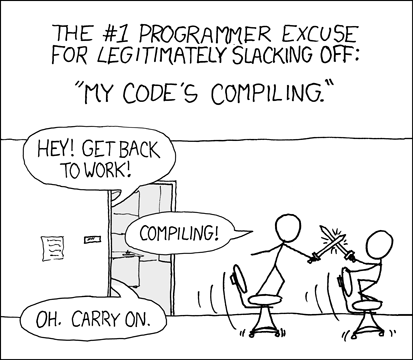
CMake unlike Make is a configuration language itself. CMake supplies a
|
||
rich library of inherent functions as well as common programming
|
||
language features like conditions, looping, macros, and functions. In
|
||
addition to that CMake is highly modular and you can always write a
|
||
CMake module yourself independent of any project. Specifically for C/C++
|
||
programming, it supplies commands to find and link libraries
|
||
automatically and lot many features.
|
||
|
||
### Language Rules
|
||
|
||
As mentioned above CMake is a language itself hence there are some
|
||
language rules related to syntax, comments, variables, etc.
|
||
|
||
- There are two types of comment in CMake, both start with `#`
|
||
character. The first one is line comments, as clear by name it is
|
||
delimited by a newline. The other one is bracket comment and can
|
||
span until the matching brackets are found.
|
||
|
||
```cmake
|
||
# This is a line comment and it ends with the line.
|
||
|
||
#[[This is a bracket comment and it can span up to multiple lines.
|
||
But it is only supported in CMake 3.0 or later.]]
|
||
```
|
||
|
||
- Variables in CMake are like any other programming language. They are
|
||
case-sensitive and have any alphanumeric characters. In general, it
|
||
is recommended using upper case names as variables. They can be
|
||
assigned and unassigned using `set` and `unset` commands. A variable
|
||
can be referenced using `${VARIABLE_NAME}`.
|
||
|
||
> CMake reserves some types of identifers:
|
||
>
|
||
> - begin with **CMAKE_**(upper-, lower-, or mixed-case)
|
||
> - begin with ***CMAKE***(upper-, lower-, or mixed-case)
|
||
> - begin with **_** followed by the name of any CMake Command
|
||
|
||
- The CMake commands are case insensitive in the latest version (3.0)
|
||
of CMake. That means `message()`, `Message()` or `MESSAGE()` are all
|
||
same.
|
||
|
||
### Basic CMake Commands
|
||
|
||
- The `project()` command is used to set the name of the CMake project
|
||
and optionally a language that is used by the project. Every
|
||
top-level CMake configuration must have this option set. The syntax
|
||
is as below:
|
||
|
||
```cmake
|
||
project (projectname [CXX] [C] [Java] [NONE])
|
||
```
|
||
|
||
If no language is specified then CMake defaults to supporting C/C++.
|
||
If `NONE` is specified then no language support is enabled.
|
||
|
||
- The `set()` command is used to set a variable to a value or lists of
|
||
values. It is one of the most used CMake commands. The accompanying
|
||
command is `unset()`. The `unset()` command is used to unset a
|
||
variable or remove a variable from the current scope. The syntax for
|
||
the three commands are:
|
||
|
||
```cmake
|
||
set (BLOG_TITLE "CMake Introduction") # assign single value
|
||
set (BLOG_TAGS "gsoc" "cmake" "fossology" "gsoc21") # assign a list of values
|
||
|
||
unset (BLOG_TITLE) # unset BLOG_TITLE
|
||
```
|
||
|
||
- The `message()` command can be used to display formatted messages
|
||
with different alert modes. There are many
|
||
[modes](https://cmake.org/cmake/help/v3.20/command/message.html#general-messages)
|
||
of displaying messages. The syntax is :
|
||
|
||
```cmake
|
||
message ([<mode>] "message text" ...)
|
||
|
||
message(NOTICE "Hey this is ${BLOG_TITLE}") # Example message with variable
|
||
```
|
||
|
||
- The `cmake_minimum_required()` is used to set the minimum CMake
|
||
version to use to generate the build files. If any older version is
|
||
used than specified then the user gets an error message. It must be
|
||
specified at the top of the *CMakeLists.txt* file.
|
||
|
||
```cmake
|
||
cmake_minimum_required (VERSION 3.0)
|
||
```
|
||
|
||
- The commands `add_executable()` and `add_library()` specifies what
|
||
executables and libraries to build and what source files must be
|
||
used to build them. One of the two commands must be used for any
|
||
binary generation.
|
||
|
||
```cmake
|
||
add_executable(<name> [WIN32] [MACOSX_BUNDLE]
|
||
[EXCLUDE_FROM_ALL]
|
||
[source1] [source2 ...])
|
||
|
||
add_library(<name> [STATIC | SHARED | MODULE]
|
||
[EXCLUDE_FROM_ALL]
|
||
[<source>...])
|
||
```
|
||
|
||
### Flow Control
|
||
|
||
CMake provides three flow control structures. They are conditional
|
||
statements (`if`), looping constructs (`foreach` and `while`) and
|
||
procedure definitions (`function` and `macro`). I will explain each of
|
||
them one by one.
|
||
|
||
- **Conditional Statements** The `if` command in CMake is just like
|
||
the `if` command in any other language. It evaluates its expression
|
||
and based on that either executes the code in its body or optionally
|
||
the code in the `else` clause.
|
||
|
||
```cmake
|
||
if (FOO)
|
||
# do something here
|
||
elseif (BAR)
|
||
if (NESTED_BAR)
|
||
# do something nested here
|
||
endif(NESTED_BAR)
|
||
# do something else
|
||
else ()
|
||
# do something here
|
||
endif (FOO)
|
||
```
|
||
|
||
You can use many operators to form complex conditions. Available
|
||
options are **NOT**, **AND**, **OR**, **COMMAND**, **DEFINED**,
|
||
**EXISTS**, **IS_DIRECTORY**, **IS_ABSOLUTE**, **MATCHES**,
|
||
**IS_NEWER_THAN**, and operators for numerical comparisons
|
||
**EQUAL**, **LESS**, **GREATER**, **STRLESS**, **STREQUAL**,
|
||
**STRGREATER**.
|
||
|
||
- **Looping Constructs** The `foreach` command enables you to execute
|
||
a group of CMake commands repeatedly on the members of a list.The
|
||
first argument of the foreach command is the name of the variable
|
||
that will take on a different value with each iteration of the loop.
|
||
The remaining arguments are the list of values over which to loop.
|
||
|
||
```cmake
|
||
foreach(<loop_var> <items>)
|
||
<commands>
|
||
endforeach()
|
||
```
|
||
|
||
The `while` command provides for looping based on a test condition.
|
||
The format for the test expression in the `while` command is the
|
||
same as that for the `if` command described earlier.
|
||
|
||
```cmake
|
||
while(<condition>)
|
||
<commands>
|
||
endwhile()
|
||
```
|
||
|
||
It is worth mentioning that foreach loops can be nested and that the
|
||
loop variable is replaced prior to any other variable expansion.
|
||
This means that in the body of a foreach loop you can construct
|
||
variable names using the loop variable.
|
||
|
||
- **Procedure Definitions** A function in CMake is very much like a
|
||
function in C or C++. You can pass arguments into it, and the
|
||
arguments passed in become variables within the function. The first
|
||
argument is the name of the function to define. All additional
|
||
arguments are formal parameters to the function.
|
||
|
||
```cmake
|
||
function(<name> [<arg1> ...])
|
||
# write the function body here
|
||
<commands>
|
||
endfunction()
|
||
```
|
||
|
||
Macros are defined and called in the same manner as functions. The
|
||
main differences are that a macro does not push and pop a new
|
||
variable scope, and the arguments to a macro are not treated as
|
||
variables but are string replaced prior to execution. This is very
|
||
much like the differences between a macro and a function in C or
|
||
C++. The first argument is the name of the macro to create. All
|
||
additional arguments are formal parameters to the macro.
|
||
|
||
```cmake
|
||
macro(<name> [<arg1> ...])
|
||
# write macro definition here
|
||
<commands>
|
||
endmacro()
|
||
```
|
||
|
||
## A Hello CMake example
|
||
|
||
This example compiles a simple *hello_cmake* program. This example and
|
||
the terminal commands are used in Linux context, however there is very
|
||
little difference in different platforms. Make sure to [install
|
||
CMake](https://cmake.org/install/) for your platform.
|
||
|
||
- Create a folder and create a file named `hello_cmake.cpp` in that.
|
||
You may add your own code. Here is my example code.
|
||
|
||
```cpp
|
||
#include<iostream>
|
||
|
||
int main() {
|
||
std::cout << "Hello CMake\n";
|
||
return 0;
|
||
}
|
||
```
|
||
|
||
- Create another file named `CMakeLists.txt` and add the following
|
||
script in that file.
|
||
|
||
```cmake
|
||
cmake_minimum_required(VERSION 3.0)
|
||
|
||
# set project name
|
||
project(hello_cmake)
|
||
|
||
# print compiler info
|
||
message("The compiler is ${CMAKE_CXX_COMPILER}")
|
||
|
||
# add executable
|
||
add_executable(Hello_cmake hello_cmake.cpp)
|
||
```
|
||
|
||
- Create another directory `build` and run the following commands.
|
||
|
||
```bash
|
||
# create folder and change directory
|
||
mkdir build && cd build
|
||
|
||
# run cmake config
|
||
cmake ..
|
||
|
||
# build project
|
||
cmake --build .
|
||
```
|
||
|
||
You will be able to see a `Hello_cmake` binary in the *build* folder.
|
||
Hooray you have successfully built a project using CMake. For more [read
|
||
here](https://cmake.org/cmake/help/v3.20/guide/tutorial/index.html). In
|
||
the next blog I will explain how to create CMake configuration for a
|
||
more complex project.
|
||
|
||
Thanks!
|
||
|
||
## References and Credits
|
||
|
||
- [CMake Website](https://cmake.org)
|
||
- [CMake
|
||
Documentation](https://cmake.org/cmake/help/latest/index.html)
|
||
- [Mastering CMake Book](https://www.kitware.com/what-we-offer/#books)
|
||
- [CMake
|
||
Tutorial](https://cmake.org/cmake/help/v3.20/guide/tutorial/index.html)
|
||
- [You (C)Make Me
|
||
Happy](https://prateekvjoshi.com/2014/02/01/cmake-vs-make/)
|
||
- [Compiling xkcd.com](https://xkcd.com/303/)
|